Final: Reflection

The writing assignments from this course has allowed me to look at matters from different viewpoints and explore in-depth to the news or events I hear daily. They gave me an opportunity to learn more about the world and society around me and also reminisce on events from my childhood. From the writing assignments, I was able to think and write more creatively from before as my previous English classes were much more structured and focused on serious terms and topics. For me, the most effective were the major papers, and the blog assignments were the most entertaining because of how open they were while forcing me to go more in-depth about various topics. 

The major papers introduced me to new concepts about English and practice those skills. The word counts was what forced me to really learn the new concepts more in-depth while improving my writing skills. I would have to think of ways to reach the word counts, which meant adding more detail, descriptions, or interpretation to fulfill that number. With the first literacy narrative essay, the literacy narrative allowed me to reflect on how I got started with writing. Before, I never thought about how I even started, but as I was trying to start the essay, I had to think of what influenced me as a child to start reading and writing. It brought me back to my childhood, with the Rainbow Magic series and Percy Jackson series, as these memories seemed so long ago when it was only actually a couple of years. With the rhetorical analysis, I was thankful that we got to choose whatever piece we wanted to do our essay on. This allowed me to explore a variety of options to find one that really showed the rhetorical devices. I got to look through inspirational speeches to just newspaper articles, which is something I would not normally do in my own free time. Then, I was able to recognize and interpret these devices, which allowed me to recognize some even in my own writing. In the last essay with the open letter, it was new to explore a topic I was interested more in-depth. I usually just listen about these topics in the news and I would not further explore them. With the open letter, I was able to read through and analyze professional writings and articles to see the different perspectives. Even though, at the moment the major essays were tedious as they were longer, looking back now, they were worth the effort and time because I was able to learn more in-depth about several issues and reflect upon them respectively. 

The free writes allowed me to express some of my bottled up feelings about what was happening in the world or just about a certain topic. It taught me to communicate and organize my thoughts clearly into writing. The freewrites reminded me what writing was: a creative medium to allow someone to express themselves and that it wasn’t always so serious. 

With the readings, I appreciated the fact that they were shorter than books, which allowed me to fully engage in them. The readings were also interesting, and not just textbook-styled-boring books. The readings also showed different styles and tones that every author uses, and it was interesting to see the plot twists that some authors included. 

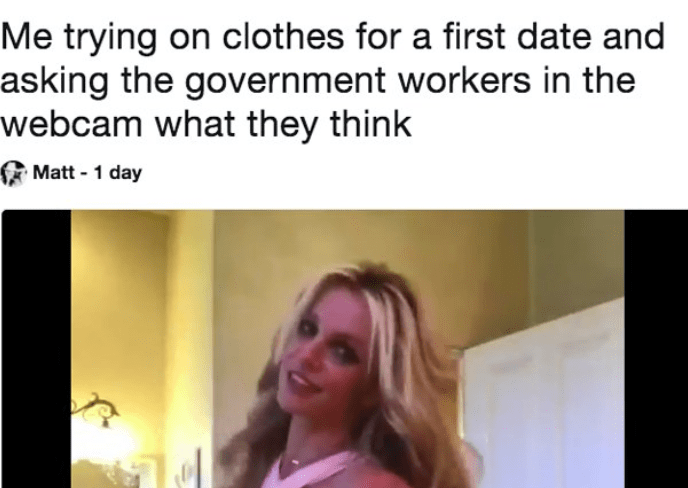
Finally, the blogs allowed me to write in different perspectives and not with just the way I was used to. Starting with the 3 audiences, because we had to write to 3 different audiences, each one had its own tone and dramatic effects. I had to learn to adjust my writing to reflect each of my audiences, which allowed me to make my writing fun, serious, and casual at the same time. The 1984 blog made me think about the technology, entertainment, and security measures we have in place today that the government or anyone can track us with. It was always a side thought, but writing that blog, in a way, forced me to think about everything surrounding me. The things I use everyday, such as my phone and my computer, could just be another toy that the government uses to spy on us. With the logical fallacies, it was interesting trying to manipulate my writing in a way that would capture or change the reader’s mind. I got to explore a different viewpoint and research upon that, which almost convinced me to change sides! I had to subtly use different logical fallacies to trick my audience to agreeing with me. Finally, the visual essay just allowed me to reflect on things that matter to me. I had the opportunity to talk more about these things, such as what I did on campus to just my hobbies. 

Over the course of the semester, I feel that my writing has improved. To start, because we had so many quick assignments each week from the readings to the free writes, I believe that constantly writing (or just doing something a lot in general) helped me to improve. It helped me get my thoughts on paper faster, especially with the 7 minute time limit on the free writes for example. My writing has also become more “creative” because the assignments were not as strict and structured as before. I appreciated the fact that we even had to add a picture or something else at the end, which broadened my creativity and added a fun element to each assignment. The assignments also taught me some terms that I did not know before, such as logical fallacies. I was also able to go in-depth to certain topics that I heard of, but did not take the time to learn about before, such as dystopias and individualism. 

I think I have a better understanding of rhetoric in general because of the assignments this year. Before starting the essay, I looked through several videos and examples to deepen my understanding. Then, I looked through several videos and articles online just to find one that had several. Looking through these sources helped me recognize them easier, and it has now become an everyday use that I don’t think about. When I read an article and I see a rhetorical device, I subconsciously note it in my mind. 

One of the things I learned about how I write is that I tend to write better when I am under pressure. I am able to quickly put my thoughts out because of the time limit or limited circumstances. I am able to write something that fits the criteria because the tone or mood. I have gained confidence in my writing skills because of the assignments this year. I was able to reflect and see where my writing style has came from and what influenced me, especially with the Literacy Narrative. The 3 audiences was also an open and creative way to see how my writing changes when I have a difference audience. 
Blog: Utopian Society

Leaders: Brian Yee, Chloe Lee, Griffen Hamilton, Lindsey Ryan

Education 

Education is of utmost importance, but unlike the schools we know there is one school for all ages. Instead of being in school for 12 years, they graduate at 16 years old so they can join the community and work. They learn of George Washington’s life, and career.  What the main curriculum is about is early American history and values. That is something taught for all 10 years. They are also taught basic math, and science, subjects that can help advance the community. Everything taught to the students either correlates directly to their religion or to advance the workforce in the community. The school will be free for everyone and all teaching necessities will be a high priority when it comes to taxes. 

Religion 

Religion is very strict in this utopia, however, there is only one religion the citizens are allowed to follow.  The religion is a new age form of worship directed toward a bronze statue of George Washington.  Everyone has to attend every ceremony and service which is held every night at midnight.  Citizens are free to worship at any part of the day but they are only allowed to hum the worship songs to George Washington.  Their voices are only allowed to be used in song when they are at their nightly services.  Nobody is allowed to have real teeth in honor of their savior George washington.  At age seven, all real adult teeth are removed and replaced with wooden teeth to be more like George Washington.  In addition, all people have to get their head shaved at age 5, because they can’t have real hair grow past their ears.  Everyone has to shave their head once a week to maintain short hair.  Each meeting it is mandatory that citizens wear white wigs like Washington, however, it is against religion and the law to wear the wig anywhere outside of the service.

Law & Order

For those who break the rules, they will be put first placed into a camp to reevaluate what they did wrong and to be conditioned correctly. They will be put under a strict schedule. After, they will spend a few weeks or months, depending on what rule they broke, painting new artwork of George Washington. They will be reevaluated at the end to make sure they will not do anything bad again.

For those who harm others, they will be put in another camp that will train you how to serve people and be their assistant. After the camp, there will be a test to make sure you are obedient, and they will end up serving the person they have harmed or their family. 

For conflict resolution, the two people involved in the conflict will do a coin toss. If things still aren’t resolved, they have the option to ask an appointed official that is in charge of making decisions.

To enforce the rules of the society, there will be watchers who seem like regular citizens. They will patrol the streets casually to make sure that nobody is doing anything wrong or out of the ordinary. 

Economics, Work & Leisure

For production and distribution of goods and services, there will be a set amount of citizens assigned to these positions that will specifically make and distribute any goods and services needed. Each family will receive a basket for each week. Families will be able to submit forms if there are any dietary restrictions or requests, but it will be the head of the production and distribution team that determines if the request is fulfilled. There will be no need for currency since everything and everyone should be equal and have equal opportunity. Wealth is not distributed.

The economy is reliant on the rest of the world with the government controlling everything. People will have specific jobs assigned by the government, and as long as they are fulfilled, each citizen will receive their necessities, and sometimes their wants. 

Declaration of Independence 

George Washington, often referred to as “Father of (Our) Country,” plays a significant role in forming our utopian society. Our society places great emphasis on history and facts, which is why the first president of the United States is a perfect leader to look up to, who also drafted the U.S. Constitution. Our society loves equality and being fair, so having one school for 16 years, strict guidelines, uniform haircuts, and equal distribution is key to our society. Having one school creates uniformity and community within our society while also giving equal preparation for work afterward. In the current society, different levels of schools for various ages like middle schools, high schools, and universities create a broken balance in education and a segregated group of students without unity amongst every student. Religion also plays a big part in our society, and having one religion with one focus on George Washington unifies the citizens by having an image to look up to and follow without much deviation. In the current society of freedom of religion creates problems with people’s morals and values based on their different gods. A more perfect society needs to be formed for harmony and efficiency in the community, which creates peace and uniformity. There will be less deviation and wrongdoing. Our society is different as we stress George Washington’s values, footsteps, and goodwill. Our society has some of the same characteristics of our current society with the importance of the U.S. Constitution, basic levels of education are taught, and prison-like camps to rehabilitate wrongdoing and promote moral actions. 

List of Rules 

  1. Remove adult teeth when age seven
  2. Shave head at age 5
  3. Shave head once a week after the fourth ceremony of the week has finished
  4. Must attend every ceremony and service in honor of George Washington
  5. No using the voice for worshipping outside of service
  6. Must wear wig in ceremony only and not outside of it
  7. Women’s dresses must be exactly two inches past the knee and only black
  8. Men have to wear black pants everyday
  9. Men and Women can only wear gray turtlenecks that go past their hands
  10. You can only marry within the family

Governing Body 

The government of the utopia is structured like a mixed government since George Washington is a figurehead, a lot of power comes from his bloodline and those close to him dictating the rules and making sure people follow in his footsteps. Also, there are watchers over the city, making sure people follow the rules and are kept in their place to avoid corruption and chaos. Most of the utopian society/government revolves around George Washington, so his actions mainly dictated the rules and decisions that should be made in the perception of what Washington would have done based on the facts in history. This could go wrong as people decide to revolt against the government. No person is 100% likable, leading to some disgruntlement of Washington as a figurehead of the utopia. People have strong opinions and act upon them, which could lead to a revolution. Citizens could feel powerless and unworthy compared to watchers of the city. 

After you have created your society, write down the ways (brief list) in which it could go wrong.

In general, people are not perfect and are bound to make mistakes. Independence and freedom are what promote a diversified and creative society that thrives and one that is not robotic or controlling. There will come times where people lack motivation and do not do their part in keeping the society working and thriving, in turn, not learning in school and not following in Washington’s footsteps. A society can never please everyone, and there will be ignorant or naive people that do not follow the rules and choose to be a rebel, therefore, disrupting society. Since there is authority/watchers in society, there will be people that feel powerless and want more control of society. George Washington might also not be perfect in everyone’s eyes.

https://vm.tiktok.com/3HQFsV/

Essay #3: Open Letter

To the U.S. Department of Education, 

When I think of my sophomore and junior years, a common theme in both pops up: standardized testing. I think of the countless hours I have spent trying to learn how to strategically read the long paragraphs, how to solve the many math problems, and how to analyze articles in order to write that rhetorical essay. I think of the thousands of dollars my parents spent, just so I could receive a numerical score. The many hours I, or even my tutors, had to sit in a classroom to learn the “tricks” in how to solve each question efficiently and correctly. Standardized testing, especially the SAT and ACT, should not be a requirement for students as it is not an accurate measure of a student’s academic potential and abilities. 

To begin, standardized testing is a test that objectively assesses the academic standards of student in a standardized format with computerized scoring to reduce the bias and subjective evaluations. To keep it fair, the test requires all students to answer the same questions and is scored in a consistent and standard manner to allow the state or nation compare the performance of students to each other. Since 2002, after the No Child Left Behind Act (NCLB), and the updated 2015 Every Student Succeeds Act (ESSA) has been implemented, every student, from 3rd to 8th grade, has to take the state standards test with the average results being made public (Berwick). 

Almost every college student has taken the SAT or ACT in their junior or senior years of high school. According to CollegeBoard, “most four-year colleges require scoers, and some two-year colleges recommend them. Nearly all four-year colleges require you to submit admission test scores.” Although standardized testing should not be a requirement for students, the test itself has some positive impacts. For example, standardized testing holds schools and educators accountable for their student’s performance and educational results. It evaluates if students have learned what they are expected to and if they have met the state’s standards. However, many colleges are starting to not require the standardized testing as the scores are “proved to be strongly linked to family income, family education level, and race” (Valerie Strauss, Washington Post). 

However, standardized testing does not teach students the material they need to know for their regular school assignments, and standardized testing is now considered an additional pressure that students have to face. “Tests don’t explicitly teach anything. Teachers do” (Jose Vilson). Teachers are the ones that essentially control how much a student knows. Having a test that is created by another individual is unfair as students will have to learn additional material to successfully do the tests. As competition grows to get into the top colleges, standardized testing is becoming misused and can even be called an abuse of testing. Tests are supposed to be a reflection of a student’s performance. However, because of the growing competition, standardized testing has become an indicator how much a student can memorize, but not actually learn. “The pressure to raise test scores has become so strong that testing often degrades instruction rather than improving it. Many parents have encountered this – large amounts of teaching time lost to test prep that is boring, or worse” (Bari Walsh). 

A student’s SAT or ACT score strongly depends on the level of education a student receives and how much additional help they are able to get. Standardized testing has an inherent bias towards certain groups, such as students of color, underprivileged children, and students with disabilities. In a 2013 paper titled, “Race, Poverty and SAT Scores,” researchers Ezekiel J. Dixon-Roman from the University of Pennsylvania and John J. Mcardle from the University of Southern California found that wealthy students earn higher SAT scores compared to their low-income peers (Dixon-Roman and Mcardle, Race, Poverty and SAT Scores). In addition, according to the Washington Post, students whose families earn more than $200,000 a year earn  an average score of 400 above the students whose families earn less than $20,000 a year. These minority and underprivileged groups do not have the same amount of resources that better communities or groups have with the million dollar industry of test prep and tutors. Daniel Koretz describes standardized testing as a “fraud – an expensive harmful intervention that does little to improve the practice it purports to measure, instead feeding a vicious cycle of pointless test prep.” Not everyone has a similar opportunity to receive fair scores. 

In the past, these exams were only given to place students into classes or to see what kind of help they needed. Recently, these scores have been published onto news sources and are now used as a criteria and judgement for children, teachers, and schools. From a student’s perspective, these exams are now the guidelines that determine whether one receives a diploma or not. In addition, today, the significance of the SAT or ACT is to determine what kind of future the student has ahead of them. “Our children are tested to an extent that is unprecedented in our history and unparalleled anywhere else in the world” (Alfie Kohn). This industry is also growing more competitive for their personal benefits. The corporations that create and score these tests gain enormous profits because almost every student is required to take these tests. These same companies end up selling materials designed to raise scores that was designed by themselves (Kohn). 

Today, with the global pandemic COVID-19, some colleges do not require standardized testing anymore. According to Governor Newsom, he states that “this time is stressful enough for students, families and educators without the additional burdon of annual testing … our main focus is on supporting the mental and socioemotional health of students, while continuing to provide educational opportunities such as distance learning.” This emphasizes the fact that standardized testing, even without the global pandemic, is stressful. Students spend months, even years, preparing for these tests, especially with the SAT and ACT. Luckily, a record number of colleges and universities have dropped the requirement that students need to submit a test score. This is in addition to the dozens of colleges and universities that have exponentially dropped this requirement. Many colleges believe that “the value of a single test score and the fairness of using that score in admissions when all students do not have the same access to great teachers and test preparation” is unfair (Valerie Strauss). 

To conclude, standardized testing should not be a requirement for students as it is not an accurate and fair way to measure a student’s academic potential. There are a variety of factors that can impact a student’s score, such as their economic status, race, and privileges. Standardized testing is not how it was used before as it is based more on getting a good score rather than seeing how much a student has actually learned. 

Works Cited

“(PDF) Race, Poverty and SAT Scores: Modeling the Influences of Family Income on Black and White High School Students’ SAT Performance.” ResearchGate, http://www.researchgate.net/publication/280232788_Race_Poverty_and_SAT_Scores_Modeling_the_Influences_of_Family_Income_on_Black_and_White_High_School_Students’_SAT_Performance.

Ascd. “Why Standardized Tests Don’t Measure Educational Quality.” Why Standardized Tests Don’t Measure Educational Quality – Educational Leadership, http://www.ascd.org/publications/educational-leadership/mar99/vol56/num06/Why-Standardized-Tests-Don’t-Measure-Educational-Quality.aspx.

Berwick, Carly. “What Does the Research Say About Testing?” Edutopia, George Lucas Educational Foundation, 25 Oct. 2019, http://www.edutopia.org/article/what-does-research-say-about-testing.

Partnership, Great Schools. “Standardized Test Definition.” The Glossary of Education Reform, 12 Nov. 2015, http://www.edglossary.org/standardized-test/.

Strauss, Valerie. “A Record Number of Colleges Drop SAT/ACT Admissions Requirement amid Growing Disenchantment with Standardized Tests.” The Washington Post, WP Company, 18 Oct. 2019, http://www.washingtonpost.com/education/2019/10/18/record-number-colleges-drop-satact-admissions-requirement-amid-growing-disenchantment-with-standardized-tests/.

Strauss, Valerie. “Dozens of Colleges and Universities Are Dropping SAT/ACT Requirements for Fall 2021 Applicants, and Some for Longer.” The Washington Post, WP Company, 10 Apr. 2020, http://www.washingtonpost.com/education/2020/04/10/sat-act-2021-coronavirus/.

“When Testing Takes Over.” Harvard Graduate School of Education, http://www.gse.harvard.edu/news/uk/17/11/when-testing-takes-over.

Logical Fallacy: Standardized Testing

I remember several occasions throughout my elementary to high school in which I dreaded coming to school because I knew, that day, we would have to take that never-ending, boring test. This test happened every year: we would come to school with the infamous #2 pencil and have to be prepared for the most tedious situations like reading a few paragraphs just to answer a few questions, or solve long math problems. To add to all that, none of the efforts put into this long test would be counted towards our grade. This was all because standardized testing existed. I used to think that standardized testing was useless. There was no purpose to the test except for the district to see how we, as students, were academically doing and to compare us to the other districts. However, that, essentially, is the whole point of standardized testing. Looking at it from a broader viewpoint, standardized testing is necessary because it helps provide districts, states, and even our parents a crucial comparison between schools and districts. Standardized testing provides a benchmark or “goal” for students to achieve, and it also allows parents to see how their student is doing academically against the nationwide results. 

Standardized testing is considerably an accurate and unfiltered measure of what and how much a student knows. Because each teacher has a different grading system, scores can be uneven across schools and classes. For example, one math teacher can have easier tests than another, even in the same school. This would mean that getting an “A” would be easier in the first teacher’s math class. Teacher grading is subjective, and can also be favored towards certain students. Standardized testing makes the playing field fair and is an objective measure of student achievements. Without standardized testing, “policymakers have to rely on tests from individual schools,” which can be biased because schools can produce results that are favorable (procon.org). In addition, parents are able to compare their students to others within the state. Parents want to know if their child is meeting the average state benchmarks and how he/she compares to their statewide peers. According to the June-July 2013 Associated Press-NORC Center for Public Affairs Research Poll, they found that “75% of parents say standardized tests “are a solid measure of their children’s abilities and 93% of parents say standardized tests should be used to identify areas where students need extra help” (fordhaminstitute.org). The standardized testing allows for schools to send messages to policymakers and parents to show how their students or children are doing against national learning benchmarks. This ensures that children, especially those of color and low-income, are able to get the education equal to others. 

In conclusion, standardized testing is necessary in measuring the nation’s benchmark academic performance. It provides a clear view on academic mastery and is an objective and summative assessment of student achievement. Without standardized testing, it would be difficult to compare students across the nation from each other as each teacher’s grading system is different. It allows for parents to see how their child is doing in school compared to others. Standardized testing also allows for schools to compare themselves to each other to ensure that they are doing what is necessary to provide a top education to their students. It also allows parents and the district to keep schools accountable for their student’s academic performances. Because of these reasons, standardized testing is essential in our education system today. Standardized testing is not focused on narrow content, but rather aimed towards the important basic skills that students need to master. 

Essay: Rhetorical Analysis

article: https://www.nytimes.com/2014/11/05/opinion/why-sand-is-disappearing.html

Today, the world’s natural sand beaches are slowly disappearing due to the rising sea levels and increased storm action, along with the continuous harm from human development. There are no substitutes for sand, and sand is necessary for the production of many everyday objects, such as toothpaste and glass. In the article, “Why Sand is Disappearing,” author John R. Gillis claims that conservation efforts must be undertaken to protect beaches and coastal sand. Gillis addresses us, the readers, to stop endangering our natural resource and to take actions to prevent sand from disappearing. Throughout his article, Gillis uses a variety of evidence and persuasive elements to convince readers to save the beaches and the sand. Gillis provides quotes to set the diction and tone of his article, includes statistics and other country’s facts to prove his credibility and have credible information, and also writes in third person to evoke change and raise awareness about what is happening to our natural resource. 

Gillis begins his article with this relaxing and beautiful quote from naturalist D.W. Bennett. Bennett’s quote provides an imagery that shows what sand used to be. The tone of Bennett’s quote sets the mood to be calm and imaginative. Gillis starts the second paragraph with the quote describing the beach as a place where the “sand stops to rest for a moment before resuming its journey to somewhere else.” The somewhere else allows for readers to almost imagine the many wonders sand can do and where it can go. This also shows the reader that sand is necessary for beaches to form and that the sand’s beauty can be appreciated wherever it stops. However, after this first paragraph, Gillis breaks up the calm tone and includes a sudden violent diction. Gillis talks about the reality of what it is currently happening to beaches. For example, the trash that humans throw out “creates turbidity that kills coral beds and damages spawning grounds, which hurts inshore fisheries.” This death-like diction lets readers see what is really happening compared to what should be happening like Bennett’s quote described. This diction lets the tone for the rest of the article to be dark, but still informative. Gillis uses this diction to also show readers what our trash is doing to the beaches and the sand. The “endless lines of dump trucks” is what is causing this natural resource to disappear. 

Gillis continues his article by placing statistics throughout to emphasize the damage that humans are creating to the beaches.. The number Gillis uses are extreme, which opens up the reader’s eye to the impact that we have on the world. He includes facts, such as how the Virgina Beach “alone has been restored more than 50 times” and how the “East coast barrier islands have used 23 millions loads of sand.” The fact that Virgina Beach has already been restored 50 times is an insane amount and pushes the readers to see that conservation efforts towards beeaches and sand needs to take place. The loads of sand emphasize how much sand we waste. Gillis uses this to try and get a sense of sympathy for readers and try to get them to help out. “75 to 90 percent of the world’s national sand beaches are disappearing” and if we do not take action soon, readers can infer that most beaches will be gone. Providing the statistics allow readers to draw their own conclusions. The facts Gillis provides not only help prove that he did research, but also show readers the excessive amount of effort that needs to be put in. Gillis also includes other places such as India, Sierra Leone, and the Virgina Beach. Gillis names these places to compare and contrast the different beaches. He calls out India and Sierra Leone later in the article to emphasize what they have already done to make conservation efforts. Including the statistics and the examples not only emphasize how much damage we are doing, but to also prove his credibility, or use the rhetorical device, logos. Using these facts in his article allows the reader to trust what he is saying as he is using credible information. The evidence strengthens his argument and grabs the reader’s attention to the reality. 

Finally, Gillis ends the article with third person pronouns. This allows Gillis to interact directly with the readers and include their voice in the passage. Without ending with the third person, readers only take in the facts and feel as if they do not need to be involved. It also allows for his article to seem less biased as he is seemingly asking the reader to participate in what he believes in. Using third person sets a more definite and serious tone based on facts instead of just Gillis’s beliefs. It allows the author to have more of an authorative voice to claim the reader’s thoughts and also prove his credibility. Gillis tells them specifically what needs to happen and ends the paragraph with a positive note that only if they help, then the beaches will slowly start to come back to normal. He also includes one final quote from Rachel Carson that is similar to D.W. Bennett’s. The quote ends the passage in a calmer tone that separates it from the forcefulness instructions previously.

Gillis builds his argument using quotes and contrasting diction, statistics and examples to show real numbers to emphasize the need to act now, along with third person pronouns to get the reader involved. Gillis uses all these elements to convince readers that conservation efforts must be undertaken to protect the beach and the coastal sands.

1984 blog

In 1984, technology is used everywhere to control everything that people do. Because it was everywhere, technology was able to control people with fear as people were too afraid to have any free thought or take any action that was considered illegal. The government had telescreens that could watch what an individual was doing anytime in their homes as well as microphones to record what they were saying outside. 

For me, if I knew that my technological devices were constantly watching and listening to me, my immediate answer would be that I would stop using them as much and be more careful when they are around. I would notice that my phone was around me more often, and try to not have it with me everywhere I go. However, it is strange that we do know that our devices track us in a way, yet majority of us, including myself, don’t do anything about it. For example, I know that after we go on some websites, it can show up as an ad on YouTube or Facebook. However, I usually will just notice it, but not do anything to change being tracked. 

With the technology today, we know that Google Home and Alexa track us. Social media sees what we look at and what we like to accurately adjust the ads and content we see. The technology today collects this information to not only make sure what we see is what we want, but to also potentially give the information to other sites that want to know what an individual likes. However, a disadvantange is our privacy. Sometimes, we don’t want companies or brands to see and follow what we like, and we want to know that when we are on these sites, that we can browse with security. As society and technology advances, we are losing that privilege. People are constantly watching what we do, whether it be the news trying to see what is going on or the government listening into our conversations and online messages. I think I would give up my privacy to an extent to ensure the safety of our country. However, I also do know that we already are doing that. For example, the government tracks our conversations with people, so that if someone were to talk about something that can harm our people or our country, such as terrorist attacks, the government will know who to track down. I do not believe that we should be constantly monitored, but a certain level of being monitored is necessary for our security. For example, I think the government watches our messages and conversations in order to notice any danger, such as terrorist attacks. However, the government should not intrude more than how it is right now, or our society can become like 1984 where everything is being watched and controlled. 

NOVA Handout #1 + video

The Caf

  • Many stations: Wok (chinese), sushi, italian (usually pasta and pizza), salad buffet, euro, Simple Servings, vegan, burger station, desserts
  • variety of drinks, cereals, milk, usually has bananas, apples, oranges
  • Based on swipes
    • Usually 10, 12, 14, or 19 swipes per week that one can use to go into the cafeteria for breakfast, lunch, or dinner
  • Can “purchase” swipes if you run out with Panther Bucks
  • Put trays on a “conveyor belt” and empty food on trays below near the exit 

Parking

  • Parking lots for dorms: Jim Miller, Sandhu parking, and Pralle parking
  • Can’t park on street or you will get a ticket
  • Panther parking pass sticker on front of car
  • Lashinger is an on campus parking lot but it’s far from the dorms
  • Limited spots, not enough for each person to have a car
  • People with cars have to strategically plan out when they park in order to get a spot near their dorm

video link: https://drive.google.com/file/d/1RVJQxSY-i1yQ_N-EhI68bTxRZ4WHa1AP/view?usp=sharing

blog post #2

It was the Fairy’s Fault

I remember when I was young, I would absolutely refuse to read anything without pictures. I would always choose the books that were either the most colorful or had the least amount of words. In Kindergarten, we were assigned these thin square-shaped colored booklets. I don’t recall what exactly they were about, but I remember that these were the first required reading that I was assigned to do. At this age, books were a tool that taught me the basic grammar rules and how to identify words, such as nouns, verbs, and adjectives. The first books that drew me into reading were the Rainbow Magic fairy series. My dad would even bring me to our local Barnes and Noble the day that a fairy book would be released as I would always be waiting impatiently for each new book. Because these books were a series, the idea that each fairy had a different niche to them was what I wanted to find out the most. I would even draw some of the fairies in a sketchbook in my free time. Eventually, I had over two shelves filled with these books. The Rainbow Magic series attracted me not only because they were smaller in size and easier to read, but also, as a young girl, I was able to imagine myself as one of these fairies and go through their story. One of the books even had my name, so I remember keeping that one close to my heart and reading it over and over. As a young girl, I loved the ideology-theme life which included these fairies and imaginary creatures, because it allowed my imagination to wander and, in a sense, escape from reality.  

Around my elementary and middle school years, I started to keep up with the Percy Jackson series instead. The storyline was what really captured my attention as each book had a slightly different plot, but still they all still related to each other. The Percy Jackson series also had a magical aspect to it, similar to the Rainbow Magic series, but they also had more exciting and fast-paced adventures. Each book had its own storyline that the protagonist was going to go through. From the Rainbow Magic fairy books to the Percy Jackson series, my original intent was to read the books that were “popular.” Everyone seemed to be talking about these series, so I wanted to go along with the trend and see what they were about. The peer pressure pushed and influenced me to read books that I never would have. 

Thinking about it now, books have provided me with knowledge that my phone or textbook does not. For the past few years and continuing, technology, specifically my phone and my computer, has replaced books, as the ones I used to read lay collecting dust on my shelf. My phone and computer hold everything I read, whether it be newspaper articles or my textbooks. However, the main difference is the feeling that each gives me. Comparing books and technology to each other, books are an escape from reality as they aren’t connected to the online world, while technology is more of an “escape,” with quotes. Yes, technology allows me to “destress,” but it also does not allow me to escape from the negativity of the online world.  

When high school came along, my choice to go to Barnes and Nobles every week to read came to a diminishing stop. The required reading of more “mature” books in school consumed most of my time, and I did not feel the want to go and find new books anymore. Additionally, my AP English Language and Composition teacher worsened my opinion on reading any better as she was extremely critical and judgemental towards our writing and made us read pages for homework each night. 

Despite my hatred towards reading, I now find myself trying to journal in my free time. Writing allows me to vent everything that I am wrestling with in my mind onto paper. Sometimes, it is hard to put my feelings into words, but with writing or journaling, I am able to write down my thoughts in a unique way that I might be the only one to understand. Journaling is like this magical place that my mind wanders into as I am able to just write down all my troubles and free myself from them. The skills I’ve developed with writing in the past have not only allowed me to complete pieces of writing under pressure, but to also use writing as an outlet for reflection and a way to express my emotions. 

blog post #1

Topic: stole Boba Guy’s boba supply 

  1. Friend

Hello! 

It’s been so long since we talked, but I literally have to tell you about this crazy thing I randomly decided to do last week, and now I really don’t know how much trouble I will be in, crap. So recently, you know, I was having my daily craving of boba. I was just casually walking by Boba Guys late one night and I really wanted some of their boba, but of course, it was closed. Boba Guys was the only boba place around me, and you know, something just hits differently about Boba Guy’s boba. And so, you know I would never do this, but something in my mind just told me to. I decided that it would be a good idea to just slip in the open door in the back and quickly grab their boba. It was a mistake, but in all honesty, I really did enjoy that boba, and maybe they didn’t even catch me. Only the janitor was inside.  As I’m writing this, I can still remember that texture and how chewy and tasty that was, but now, I’m so worried. I don’t even know if I got caught, and now I have to tell my parents and everyone too. If I’m caught, my whole future is basically over, I should’ve just waited for the morning for that boba. I hope to talk to you more soon if I get out of this mess, but I just had to update you on that quickly!

Peace,

Chloe

  1. Parent/guardian

Hi mom and dad,

It’s the third week in college, and it’s been so rough. I’ve had so many homeworks and tests and projects in this last week, and I have like 3 more in the upcoming week. I wanted you to hear this from me first, before anyone else tells or informs you about what I did. This weekend, my friends and I were walking around after dinner and we all really wanted boba. You know, Boba Guys right? My favorite boba place? We saw that the door was open, so we slipped in and took the boba and ran. I know it was wrong of me, but I just, we just really wanted that boba. It was really good too and we finished it. Only the janitor was inside, so I’m not sure if anyone even noticed. I shouldn’t have done that, and I should’ve just waited for the morning, I am so sorry. I hope that I won’t be in that much trouble, but I will definitely take care of the whole situation if anything happens. I hope to also see you guys in a month, it’s been almost 3 months since we’ve been together!

Love, 

Chloe

  1. Teacher/professor

Dear Mrs. Fucaloro,

I was absent this past Monday, and I apologize for not e-mailing you in advance. I was working on your paper late the night before, and when I finished, I wanted boba from specifically, Boba Guys. I slipped in and grabbed the boba, and after, I spent the whole night worrying about what would happen to my future. The next morning, I did not feel well, so I took the day to rest. I wanted you to know directly from me first, and I know that that reason is not excusable. I was wondering if there was any way to fulfill the participation points from that day and if there were any assignments I missed. 

Sincerely, 

Chloe Lee

Design a site like this with WordPress.com
Get started